Showing posts with label Phones. Show all posts
Merger between AT&T, T-Mobile finds unlikely allies
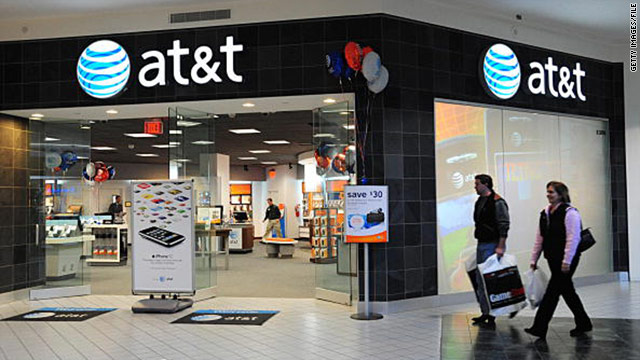
Orlando, Florida (CNN) -- Among many consumer and tech bloggers, the initial reaction to AT&T's proposal to acquire T-Mobile USA was venomous -- and skeptical that such a marriage between two giants would be allowed by federal regulators.
But in the last day or so, analysts, nonprofit organizations and even executives for the carriers' top competitor have predicted that this deal will go through. Some even say it may not be all that bad for customers.
Nonprofits concerned with education and health initiatives, including the United States Distance Learning Association, the Institute for e-Health Policy and the Hispanic Federation, are publicly expressing their support. They say the move would make faster wireless internet more accessible and would facilitate applications in health care and other areas.
The news has dominated the conversation here at the CTIA Wireless conference, the largest annual gathering for the U.S. wireless industry.
AT&T's commitment to cover 95% of the U.S. population with a next-generation wireless internet service, called 4G LTE, has been a key point in helping the proposal win favor among potential critics. Previously, AT&T's plans had accounted for 80% of Americans.
"We're at the very beginning of a major industry shift here to build powerful LTE networks, which will prove to be the critical infrastructure for the United States economy," AT&T CEO Randall Stephenson said in a call Monday with investors. "It's already changing the delivery model for both education and health care."
In countless discussions here at CTIA, many people have stopped even naming the two companies, instead calling it "the news." CTIA CEO Steve Largent even did this in his introductory keynote, describing "news of things taking place in the wireless industry."
Some critics at this convention say the 5% that gets left out of AT&T's equation makes up a fairly large geographical portion of the map. AT&T measures coverage by population, which is concentrated in cities, and not geographical area. Some sparsely populated areas will be left behind.
Still, AT&T's promise is an aggressive one. Verizon Wireless said Tuesday that it plans to cover 147 U.S. cities with its 4G network by the end of this year, but it did not provide a population number or percentage. The company said in October that its December launch would cover 110 million Americans -- just over one-third of the populace.
Despite the fact that a combined AT&T-T-Mobile could displace Verizon as the largest U.S. carrier by revenue, Verizon Wireless CEO Dan Mead and CTO David Small said in interviews that they are neither worried about nor opposed to the merger.
"I'm not concerned with what the other guys are up to," Mead said. "We had a dozen acquisitions to create Verizon."
Sprint, the other big carrier, is less agreeable. Sprint was reportedly in talks to acquire T-Mobile before AT&T swooped in.
"I do have concerns that it would stifle innovation and that too much power would be in the hands of two [companies]," Sprint CEO Dan Hesse said at a panel discussion at the CTIA conference. T-Mobile CEO Philipp Humm was also scheduled to participate, but he canceled, along with others on his team, after the news.
With Sprint left standing at the altar, the carrier may need to take some kind of action. But Verizon's Mead said Monday night that his company has no plans to bid for Sprint.
The Department of Justice and the Federal Communications Commission will review AT&T's blockbuster deal before it can go through. FCC Chairman Julius Genachowski declined to comment during his keynote address at the CTIA Wireless conference Tuesday morning.
A panel of analysts, along with others here, say that after reviewing details of the proposal, AT&T will probably be granted approval to buy T-Mobile. The carrier may need to make concessions -- perhaps significant ones -- and the process could take many months, analysts say.
The two may have to divest customers in certain areas where their combined market share is too high by federal standards. This could benefit the other carriers because they could potentially bid for those subscribers.
"I think we have a tremendous amount of competition in the wireless industry," Verizon's Mead said during the CEO panel discussion.
But consumers and advocacy groups still worry about what happens when two of the biggest competitors tie the knot. Consumers Union, the nonprofit publisher of Consumer Reports, said the benefits of the acquisition aren't clear. Public Knowledge, a digital rights organization, said Verizon and a strengthened AT&T could act as bullies who stifle competition.
Fending off criticism has become a habit for AT&T, which has taken a beating for perceptions about the quality of its network. Executives for the carrier say the merger would improve quality, give T-Mobile customers access to more desirable phones and accelerate buildout of LTE, its 4G network. The companies noted in a statement that T-Mobile had "no clear path to delivering LTE."
"This will improve network quality," AT&T's Stephenson said during Monday's call. "It will give more customers access to more services. It will bring advanced LTE capabilities to virtually every community across the United States."
Reff: http://edition.cnn.com/2011/TECH/mobile/03/22/att.tmobile.allies/index.html
Read User's Comments(0)
3-D smartphones ditch the glasses
Orlando, Florida (CNN) -- After a lukewarm reception from television buyers, 3-D technology is pushing its way onto small screens.
As Nintendo plans to launch with the first major gadget that can show three-dimension visuals without the need for special glasses in the U.S. on Sunday, two large Asian electronics manufacturers are following suit.
HTC has unveiled the EVO 3D, a follow-up to Sprint Nextel's breakout smartphone. It has a 4.3-inch touchscreen, which can display eye-popping 3-D without needing glasses. Users will also be able to capture photos and videos in 3-D using a pair of cameras on the back.
Like the original EVO, the 3D version will run Google's Android operating system and connect to Sprint Nextel's fast 4G data network.
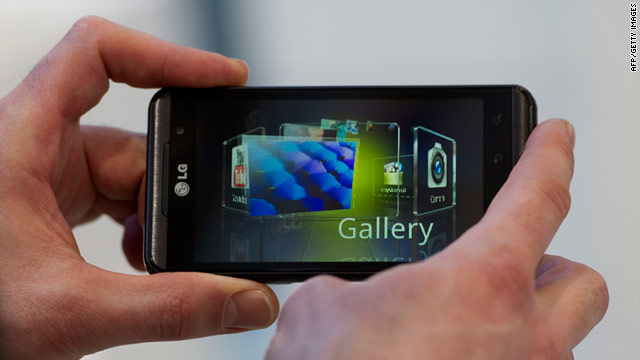
LG Electronics has been working for a year and half on a 3-D smartphone of its own, said Yongseok Jang, the South Korean company's vice president of strategy.
The Optimus 3D, as it's been called, will launch on AT&T Mobility's network with the name Thrill 4G. AT&T says it will be available in the "coming months," and a price hasn't been set.
LG developers spent a great deal of time fine-tuning the pair of 5-megapixel cameras to accurately capture 3-D media, Jang said. Calibrating the cameras to produce good-looking stills and video is more difficult than pulling off a glasses-free display, he said.
The EVO 3D prototype we tested at the CTIA Wireless conference this week shot blurry video. HTC is still working on that aspect, which will probably take several more months to perfect, said Trevor Van Norman, a Sprint marketing director. The EVO 3D will be available this summer, he said.
Nintendo's 3DS also has a pair of cameras for capturing scenes in 3-D, and it works quite well. Being the first out of the gate to offer a mainstream glasses-free 3-D gadget, Nintendo expected to find competitors, and it soon did when LG announced its phone.
"I wasn't frustrated or irritated by it," Hideki Konno, a Nintendo producer who played a key role on developing the 3DS, said through a translator in a recent interview. "I mean, considering the technology was out there in the world, I wasn't even really surprised by it."
The Japanese game company plans to fend off competitors by partnering with media publishers that can offer more games and movies in 3-D.
"You need not only the capabilities; you need the content," Reggie Fils-Aime, Nintendo of America's president and operating chief, said in an interview. "They're not going to have the great gaming content that we have."
For their phones, LG and HTC are lobbying game developers to create 3-D software for Google's Android smartphone platform. Owners also will be able to download the thousands of games already available for Android.
LG expects to include a few games packaged with the Thrill 4G and have at least 10 games available when the device is made available to purchase, Jang said. With a team led by Jang, LG also persuaded Google to make YouTube videos produced with 3-D cameras available in a separate app and allow the phone's users to upload their own, Jang said.
"Instead of being at the mercy of Hollywood studios to bring 3-D content, why don't we enable our customers to create their own 3-D content?" Jang said. Google's YouTube team also helped LG tweak the quality of the videos produced by the phone, he said.
The EVO 3D will have about a half-dozen 3-D games at launch in addition to the full "Green Hornet" film, Van Norman said. The phone will also have the YouTube 3D application.
HTC touts on its website: "You look better without the 3D glasses," as a hand tosses a pair into a trash can. LG's initiative, too, was designed to eliminate the need for wonky glasses, Jang said.
"All our TV guys and our mobile-phone guys, we try to solve that problem -- to force people to wear glasses," Jang said. "Watching 3-D stuff should not be a sit-up experience."
Both LG and HTC are planning to debut tablet computers that can, like their phones, capture 3-D with a pair of cameras. However, the tablets require users wear dorky, two-toned glasses in order to view the 3-D content.
HTC's tablet, with its 7-inch touchscreen that requires glasses for 3-D viewing, is called the EVO View 4G and will be available on Sprint.
Jang from LG, which is bringing a tablet to T-Mobile USA's network, said implementing glasses-free 3-D on the G-Slate's 9-inch screen was "a cost issue."
However, by enabling the device to capture 3-D pictures and video, Jang hopes the excitement carries over into LG's TV business, which has struggled to sell 3-D sets.
T-Mobile, the G-Slate's exclusive carrier, believes that it's still "early days" for 3-D technology and that issues will be solved over time with new devices, said Desmond Smith, a senior product manager for the company.
Samsung Electronics hasn't ventured into the mobile 3-D territory yet. "There has been a big push for (3-D) on the TV side, but we haven't done anything on the phone side," said spokesman Kim Titus.
Omar Khan, the strategy chief for Samsung Telecommunications, said mobile devices will be more valuable in the 3-D space as a way to capture content in that format, rather than to view it. "I think it's still pretty early," he said.
Reff: http://edition.cnn.com/2011/TECH/mobile/03/24/3d.phones.tablets/index.html
Subscribe to:
Posts (Atom)